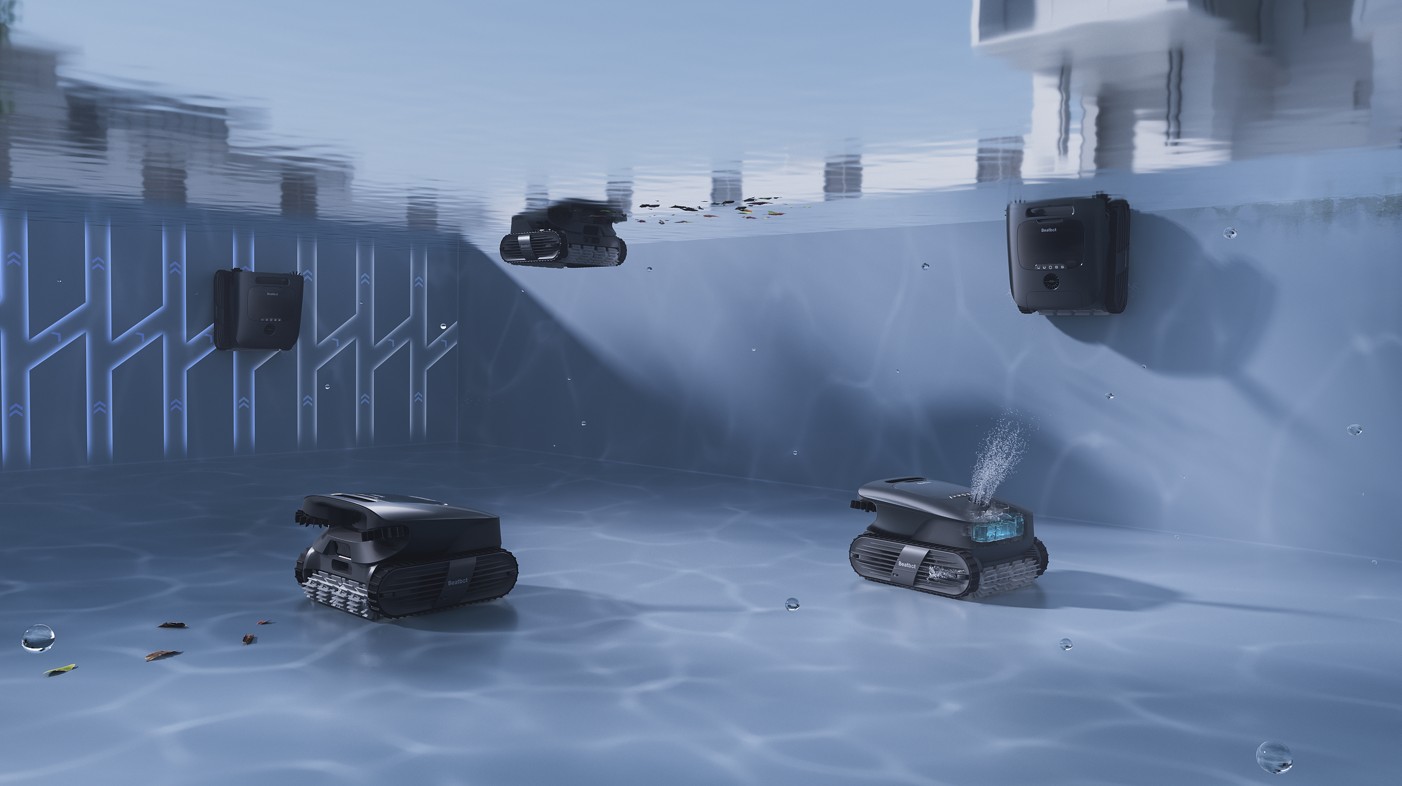
A robotic pool cleaner is an independent, self-powered device that scrubs and vacuums your pool. Unlike standard suction or pressure cleaners, robots use internal motors and smart navigation to map pool dimensions, capture debris, and brush walls without relying on your main pool pump.
Key Advantages:
- Energy Efficient: They operate on low-voltage electricity, saving money on pool pump electricity and reducing water backwash loads by up to 60–80%.
- Superior Filtration: Built-in baskets and cartridges capture micro-debris like silt, sand, and fine leaves that standard pool filters might miss.
- Zero Supervision: Simply drop the robot into the water, press start, and let it clean.
Types of Robotic Cleaners
- Corded (Standard): These plug into a poolside GFCI outlet. They provide continuous, uninterrupted power and are generally better for heavy-duty daily cleaning and climbing walls.
- Cordless: Battery-operated and ideal for irregularly shaped pools or avoiding tangled cords. They typically charge via induction and some models automatically float to the surface when the battery is low.
- Skimmers: Surface robots specifically designed to catch bugs, pollen, and floating debris before they sink to the bottom.
Top Tips for Use
- Maintenance: Always empty and rinse the filter basket/cartridge after every cycle to prevent motor burnout.
- Chemical Balance: Avoid leaving the robot in the water 24/7. Extended exposure to high chlorine levels or unbalanced pH can corrode internal filters and weaken materials.
- Pool Coverage: Only run it 2 to 3 times a week for standard maintenance; you can increase this to daily during the peak of summer when the pool sees heavy usage.